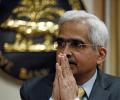
The Reserve Bank on Wednesday increased the benchmark lending rate by 40 basis points (bps) to 4.40 per cent in a bid to contain inflation, which has remained stubbornly above the target zone of 6 per cent for the last three months. The decision follows an unscheduled meeting of the Monetary Policy Committee (MPC), with all six members unanimously voting for a rate hike while maintaining the accommodative stance. While the inflation has remained above the targetted 6 per cent since January, RBI Governor Shaktikanta Das said the inflation print in April is also likely to be high.

On the back of sound macroeconomic policies and softer commodity prices, India's growth momentum is likely to be sustained in 2023-24 in an atmosphere of easing inflationary pressures, said the Reserve Bank's annual report released on Tuesday. It, however, added that slowing global growth, protracted geopolitical tensions and a possible upsurge in financial market volatility following new stress events in the global financial system could pose downside risks to growth. "On the back of sound macroeconomic policies, softer commodity prices, a robust financial sector, a healthy corporate sector, continued fiscal policy thrust on quality of government expenditure, and new growth opportunities stemming from global realignment of supply chains, India's growth momentum is likely to be sustained in 2023-24 in an atmosphere of easing inflationary pressures," it said.

'Trust your new governor,' Omkar Goswami advises RBI Deputy Governor Viral Acharya. 'Just because he is from the IAS and doesn't carry a PhD from a US university does not make him unsuitable for the task.' 'If anything, Das will pour oil on troubled waters, and save the RBI's reputation.'

The Reserve Bank on Friday approved the transfer of Rs 99,122 crore as surplus to the central government for the accounting period of nine months ended March 31.
These changes will entail a relook at the various laws governing banks in the country - the two Bank Nationalisation Acts (passed in 1970 and 1980); the State Bank of India (SBI) Act of 1955; and the Companies Act of 2013.

As many as 80-85 per cent Paytm wallet users will not face any disruption because of regulatory actions, and the remaining users have been advised to link their apps to other banks, RBI Governor Shaktikanta Das said on Wednesday. The Reserve Bank of India on January 31 barred Paytm Payments Bank Ltd (PPBL) from accepting deposits, credit transactions, or top-ups in any customer accounts.

Finance Minister Nirmala Sitharaman on Saturday said she is likely to introduce the new income tax bill, which will replace the six-decade-old I-T Act, in the Lok Sabha in the coming week.

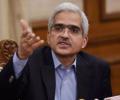
The Reserve Bank of India Governor Shaktikanta Das on Monday said that the "momentum of inflation is on a downward slope" and the central bank would continue to strike a delicate balance between the need to contain price rise and ensure economic growth. The Reserve Bank's inflation projections, Das said, are "robust" but contingent on downside and upside risks associated with the movement of global crude oil prices. The RBI takes into account a particular range within which crude prices are expected to fluctuate considering all the factors that can be anticipated and that can be sort of foreseen as of today, he said.

A top-class board is important from a systemic point of view, more so at a time when the wider financial world and India Inc is chasing the same talent as banks.
The Centre's proposal to call for governance reform in the RBI could, however, take a back seat, a source privy to the development said.

The decision by the Reserve Bank of India to introduce a unified regulatory framework on connected lending for all the regulated entities (RE) is expected to reduce the influence of business conglomerates in the Indian lending space, said bankers and experts. "Connected lending pertains to lending to related parties within the same business group. "While the RBI might appear more agreeable to allowing business conglomerates to own banking licenses, it deems it crucial to bolster regulations that would prevent conglomerate-owned banks from gaming the system," said Shivaji Thapliyal, head of research and lead analyst, YES Securities.

Mint Road, on December 21, 2023, flagged the role of self-regulatory organisations (SROs) in strengthening the compliance culture in regulated entities (REs) and providing a consultative platform for policymaking. It also decided to issue an omnibus framework for SROs.

They have also been accused of extending loans for criminal intent of falsification of repayment by a number of borrowers, including some entities associated with large corporate groups.

Markets regulator Sebi on Wednesday barred former CEO of IndusInd Bank, Sumant Kathpalia, and four other senior officials from accessing the securities markets in connection with an alleged insider trading in the bank's shares. In addition to the market ban, Sebi has impounded Rs 19.78 crore collectively from the five individuals, according to an interim order passed by the regulator.
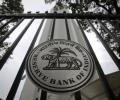
The differences revolved around the two topics of how much reserves the RBI should carry and whether the finance ministry had precipitated matters by invoking Section 7 of the RBI Act, that allows it to give directions to the RBI in public interest.

The government on Monday appointed three eminent economists Ashima Goyal, Jayanth R Varma and Shankanka Bhide as members of the rate-setting Monetary Policy Committee of the RBI

The government wants the RBI to part with most of its profit as dividend.

Seasoned bureaucrat and a stickler for rules Finance Secretary Tuhin Kanta Pandey will be at the helm of capital market regulator, Securities and Exchange Board of India (SEBI), for three years. The 1987-batch Odisha-cadre Indian Administrative Service (IAS) officer, Pandey, would replace Madhabi Puri Buch, whose three-year term ends on Friday.

The Reserve Bank has found gaps in banks' corporate governance despite issuing guidelines on the matter, Governor Shaktikanta Das said on Monday. Addressing directors of bank boards, Das said such gaps, which have been mitigated, could have caused "some degree of volatility". He also hit out strongly against "smart accounting" to conceal stress and bloat financial performance.

While the capital spending is being maintained at 3.1 per cent of the GDP, a little more would have boosted economic growth even further, suggests Rajiv Memani.

Beleaguered Paytm Payments Bank's managing director and CEO Surinder Chawla has resigned from the company, a regulatory filing said on Tuesday. Chawla's resignation comes amidst Paytm Payments Bank facing prohibitory action from banking regulator RBI. "Surinder Chawla, managing director and CEO of PPBL, has tendered his resignation on April 8, 2024, on account of personal reasons and to explore better career prospects.

There is as yet no clarity on how the process of consulting with the RBI Governor, initiated under Section 7 of the RBI Act, would unfold in the coming days. The government is keen that its suggestions made in the public interest should be heeded by the central bank, says A K Bhattacharya.

The Reserve Bank of India on Monday said that RBL Bank is well capitalised and its financial position remains "satisfactory", amid speculations relating to the private sector lender in certain quarters in wake of recent events surrounding the bank. In a statement, the Reserve Bank of India (RBI) also said there is no need for depositors and other stakeholders to react to speculative reports. The bank's financial health remains stable, it said.

The central government is looking to strengthen the boards of public sector banks (PSBs) by specifying terms of office and conditions of service for whole-time directors, and also seeking disclosures from all directors about interests in other companies. Through the Banking Laws Amendment Bill, the government is likely to introduce conditions for disqualification of whole-time and independent directors which are not specified in the current legislation. The Centre is seeking to introduce fresh changes that are aimed at strengthening the boards of PSBs, and holding their directors accountable, an official said.

India has 26 public sector banks, 22 private sector banks and 56 regional rural banks.

The government's initiative to migrate SEZ data from NSDL software to ICEGATE system for streamlined reporting of import data caused double counting of gold imports, resulting in inflated figures and the issue has now been largely rectified, government sources said. The downward revision has provided the actual picture of trade deficit (difference between imports and exports), which was earlier looking very high. The deficit for November will now be revised downwards from $37.84 billion to about $32.8 billion. Similarly, there will be a revision in overall import numbers as well.

Fintech companies believe that the impact of Reserve Bank of India's order last week on unsecured loans will be visible in six to 12 months and prompt them to diversify and strengthen their secured portfolio. Fintechs which source funds through banks or non-banking finance companies (NBFCs) are looking at quickly building their secured portfolio options to at least 40 per cent of their total portfolio. "Over the medium to long term, as part of our product strategy, we are evaluating secured products which can be enabled over a digital platform" said Yogi Sadana, the founder of Zype, a lending-focussed fintech.
The deadline for officers to decide on their career path in the biggest organisational rejig in the central bank's 85-year history ends on January 31. The immediate fallout could be its disruptive impact on the supervisory process for 2020 -- and beyond -- given the manpower shortfall, even as more entities are set to come under closer central bank scrutiny.

The Reserve Bank on Monday superseded the boards of Srei Infrastructure Finance as well as Srei Equipment Finance, citing concerns over governance and payment defaults, and decided to refer the two NBFCs for resolution under the insolvency law. This is only the second time in as many years that the Reserve Bank of India (RBI) is referring entities for the resolution process under the Insolvency and Bankruptcy Code (IBC) after taking first ever such step in the case of DHFL back in 2019. Superseding the boards of the crisis-hit Srei Infrastructure Finance Limited (SIFL) and Srei Equipment Finance Limited (SEFL), the RBI has appointed Rajneesh Sharma, former Chief General Manager of Bank of Baroda as the administrator to manage the affairs of the two companies.

Cyber thieves have been using RBI logos to send out mails to cheat customers

'The critics are getting carried away.' 'The challenge for the RBI is not any erosion of autonomy caused by demonetisation.' 'It's the whole attempt to reduce the RBI's stature and role that has been under way,' says T T Ram Mohan.

In yet another move to close the regulatory gap between banks and shadow banks, the Reserve Bank of India (RBI) has mandated exposure limits to the non-banking finance companies, in line with commercial banks. In the large exposure framework released on Tuesday, the regulator capped aggregrate exposure of NBFCs which are in the upper layer toward one entity at 20 per cent of capital base. The limit can only be extended by another 5% with board's approval. For a particular borrower group, the cap is at 25 per cent, with additional 10 per cent if exposure is towards infrastructure.

A 10-hour RBI central board meeting, on November 19, decides to set up a panel on the economic capital framework for the central bank and directs it to give forbearances to small businesses.

UCO Bank, Bank of Maharashtra, Bank of India, Indian Overseas Bank, Indian Bank, and Central Bank of India don't have a non-executive chairman.
Better protection for depositors and investors was one of the chief considerations in Union Finance Minister Nirmala Sitharaman introducing, on Friday, the Banking Laws (Amendment) Bill, 2024, in the Lok Sabha to amend four pieces of legislation. This amendment is also to improve audit quality in public-sector banks (PSBs), offer consistency in reporting by banks to the Reserve Bank of India (RBI), and provide for an increase in the tenure of directors in cooperative banks.

Historically, the RBI has tried to keep the crooks at bay by issuing a circular a day. What it needs is more onsite supervision. Merely checking high-frequency data with the help of technology is insufficient, notes Tamal Bandyopadhyay.
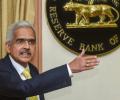
Expressing his satisfaction over the government's move to slash fiscal deficit target, Das said it will help improve investment by the private sector as crowding out impact will be less.
RBI may also be open to injecting liquidity through open market purchases of bonds but is resisting relaxing capital buffers for banks.
